
🌿
AI Vaidya
Ayurveda Assistant · ShigruVedas
🌿
Namaste! 🙏
Ask me anything about Ayurveda
Enter to send ·
AI Vaidya
Ayurveda Assistant · ShigruVedas
Namaste! 🙏
Ask me anything about Ayurveda
Enter to send ·
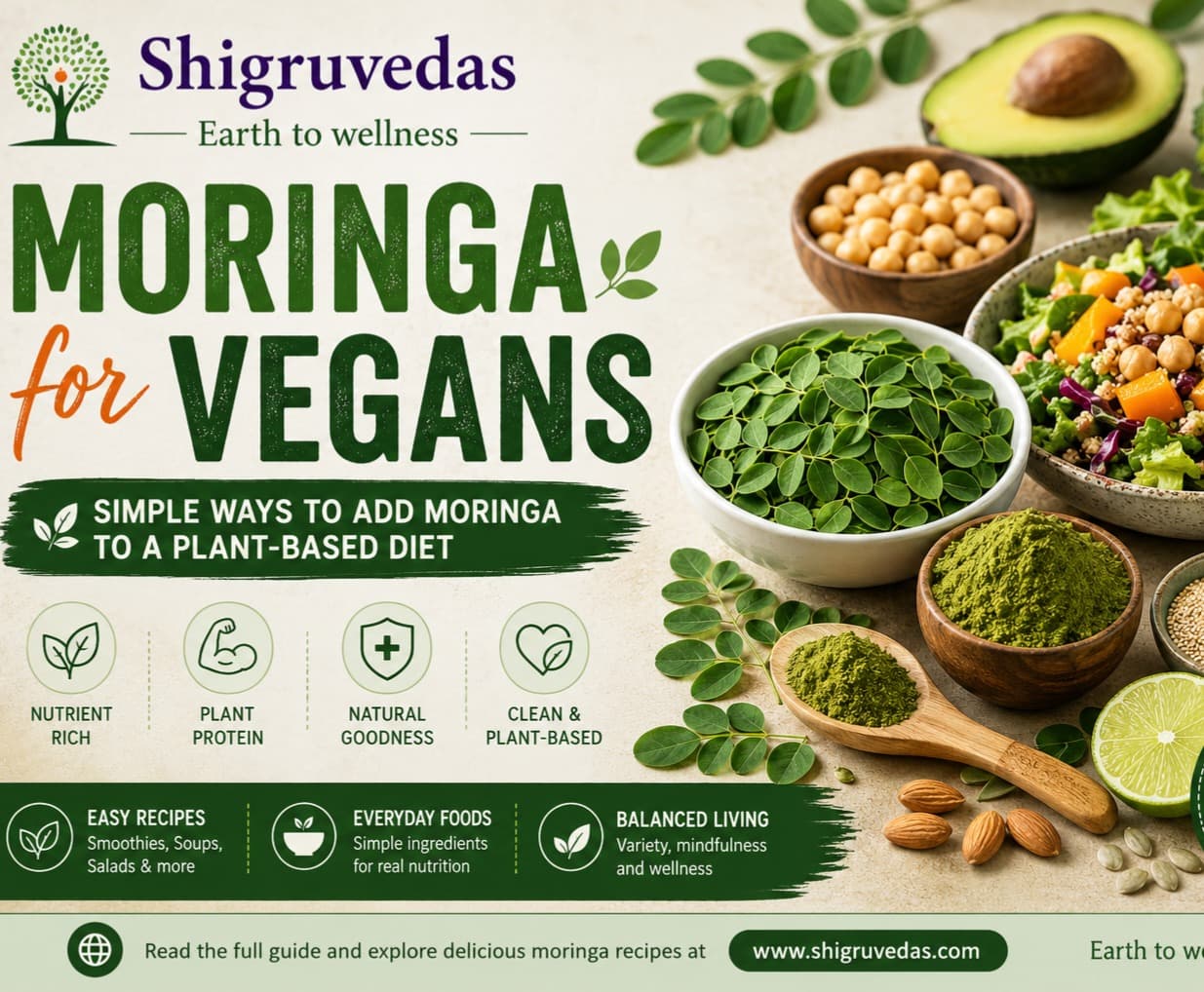
Moringa for Vegans: How to Add This Green Superfood to a Plant-Based Diet
A well-planned vegan diet can include a wide variety of nutritious plant foods such as vegetables, fruits, legumes, whole grains, nuts, seeds, and leafy greens. Moringa leaf powder is another convenient plant-based ingredient that can be added to everyday meals and beverages.
Moringa, often known as the "drumstick tree," has been traditionally used in different parts of the world as a food ingredient. Its leaves can be consumed fresh or dried and ground into a fine green powder.
For people following a vegan or plant-based lifestyle, moringa powder can be an easy way to add a leafy-green ingredient to smoothies, salads, soups, dals, chutneys, and homemade drinks.
Moringa leaves naturally contain a variety of nutrients and plant compounds. Dried moringa leaf powder is particularly concentrated compared with fresh leaves because much of the water has been removed during drying.
Moringa powder can be used in small quantities as part of a varied diet. Rather than thinking of it as a replacement for other foods, it is better viewed as one additional plant ingredient that can complement a balanced eating pattern.
A healthy vegan diet depends on variety. Different foods provide different nutrients, so relying on a single ingredient is not recommended.
Legumes such as lentils, chickpeas, beans, and peas can provide plant-based protein. Nuts and seeds can contribute healthy fats and minerals. Whole grains provide carbohydrates and other nutrients, while vegetables and fruits add fibre and a wide range of vitamins, minerals, and plant compounds.
Moringa can fit naturally alongside these foods.
It can be especially convenient for people who want to experiment with more leafy-green ingredients without preparing fresh greens every day.
One of the advantages of moringa leaf powder is its versatility. A small amount can be incorporated into many everyday recipes.
Add a small amount of moringa powder to a fruit or vegetable smoothie. Banana, mango, pineapple, apple, lemon, and other fruits can help balance the naturally earthy flavour of moringa.
Mix moringa powder with warm water and add lemon or lime for a simple herbal-style beverage. Honey can be used if it fits your dietary preferences, although vegans may prefer maple syrup, date syrup, or another plant-based sweetener.
Moringa powder can be incorporated into dal made with lentils or split pulses. The earthy green flavour works well with traditional Indian spices such as turmeric, cumin, coriander, ginger, and garlic.
Add a small amount of moringa powder to mashed avocado along with tomato, onion, cilantro, lime, and seasonings. This creates a colourful variation of traditional guacamole.
Fresh moringa leaves can be added to salads, or a small amount of moringa powder can be incorporated into a homemade dressing.
Moringa powder can be stirred into vegetable soups after cooking. This is a simple way to experiment with moringa without changing the basic structure of the recipe.
Moringa can be combined with ingredients such as coriander, mint, coconut, lemon, ginger, or green chilli to create a flavorful homemade chutney.
Moringa leaves contain protein, but moringa powder should not be treated as a primary protein source.
People following a vegan diet should obtain protein from a variety of foods such as lentils, beans, chickpeas, peas, soy foods, nuts, seeds, and whole grains.
Adding moringa to these foods can make meals more diverse, but it does not replace a balanced source of dietary protein.
One important point for vegans is vitamin B12.
Moringa should not be considered a dependable source of vitamin B12. People following a vegan diet need to pay particular attention to vitamin B12 because reliable dietary sources are limited in unfortified plant foods.
Fortified foods and B12 supplements are commonly used by people following vegan diets. Individual requirements can vary, so anyone concerned about their nutritional intake should discuss their diet and supplementation needs with a qualified healthcare professional or registered dietitian.
Moringa is therefore best viewed as a complementary plant ingredient, not a replacement for a B12 supplement or fortified food.
Moringa leaves contain minerals including iron, but the amount available to the body depends on several dietary factors.
Plant-based diets can provide iron through foods such as lentils, beans, tofu, seeds, nuts, leafy greens, and fortified foods.
Eating foods containing vitamin C alongside plant sources of iron can support iron absorption. For example, lemon, lime, tomatoes, bell peppers, and other vitamin-C-rich foods can be included in meals.
However, moringa should not be promoted as a treatment for iron deficiency. Anyone diagnosed with iron deficiency should follow appropriate medical or dietary advice.
There is no single amount of moringa powder that is appropriate for everyone.
For recipes, starting with a small quantity such as 1 teaspoon can be a practical way to introduce moringa and become familiar with its earthy flavour.
Always follow the serving guidance provided on the specific moringa product you use.
If you are pregnant, breastfeeding, taking medication, or managing a medical condition, speak with a qualified healthcare professional before making significant dietary changes or regularly consuming concentrated herbal products.
If you are looking for simple ways to add moringa to your routine, try:
These recipes make it easy to experiment with moringa while continuing to enjoy a diverse plant-based diet.
A healthy vegan lifestyle is about overall dietary variety rather than relying on one particular ingredient.
Build meals around vegetables, fruits, legumes, whole grains, nuts, seeds, and other nutritious plant foods. Include fortified foods and appropriate supplements where necessary, particularly for nutrients that can be difficult to obtain from an unfortified vegan diet.
Moringa powder can then be used as an additional leafy-green ingredient in smoothies, beverages, curries, salads, dips, and other recipes.
The goal is not to replace a balanced diet with moringa. Instead, it is to discover simple and enjoyable ways to include more plant-based ingredients in everyday meals.
Moringa can be a versatile addition to a vegan or plant-based kitchen. Its earthy flavour and powdered form make it easy to incorporate into beverages, smoothies, dals, salads, dips, soups, and other recipes.
However, no single food provides everything the body needs. A varied vegan diet, appropriate fortified foods, and attention to nutrients such as vitamin B12 are important for long-term nutritional adequacy.
Start with simple recipes, use moringa in moderation, and enjoy it as part of a diverse plant-based lifestyle.
Explore more moringa recipes from Shigruvedas and discover simple ways to bring moringa into your everyday meals.
Earth to Wellness.