
🌿
AI Vaidya
Ayurveda Assistant · ShigruVedas
🌿
Namaste! 🙏
Ask me anything about Ayurveda
Enter to send ·
AI Vaidya
Ayurveda Assistant · ShigruVedas
Namaste! 🙏
Ask me anything about Ayurveda
Enter to send ·
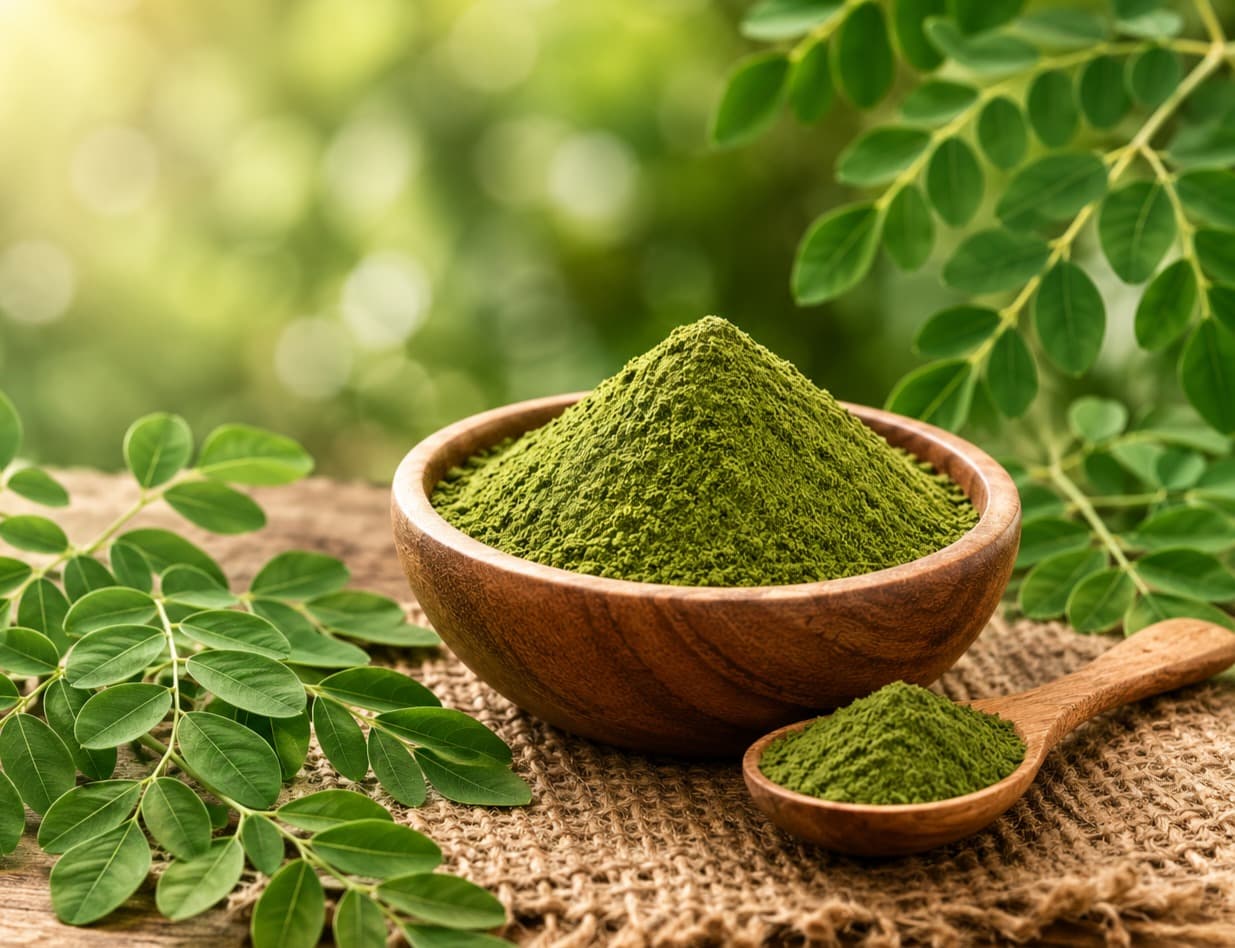
Moringa is a nutrient-dense leafy plant that has become increasingly popular among people looking for simple, plant-based ways to add more nutrients to their everyday diet. Because moringa leaves contain a variety of vitamins, minerals, antioxidants and other plant compounds, moringa is sometimes described as a “natural multivitamin.”
However, moringa should be viewed as a nutritious food rather than a replacement for a balanced diet or medically recommended supplements.
Moringa leaves contain a range of naturally occurring nutrients and plant compounds. The nutritional profile can vary depending on factors such as the variety of moringa, growing conditions, harvesting, drying and processing.
Moringa leaf powder is particularly convenient because dried leaves can be incorporated into everyday foods and beverages in small amounts.
Depending on the product and serving size, moringa can contribute nutrients such as:
The exact nutritional content should always be checked against the nutrition information of the specific moringa product you are using.
The phrase “natural multivitamin” is commonly used to describe moringa because its leaves contain multiple nutrients rather than just one isolated nutrient.
Unlike a conventional multivitamin, however, moringa is a whole plant food. It contains a combination of nutrients and naturally occurring plant compounds.
This makes moringa an interesting ingredient for people who want to diversify their diet with nutrient-rich plant foods.
Adding moringa powder to meals and beverages can be an easy way to introduce another nutrient-rich plant ingredient into your diet.
Moringa leaves contain naturally occurring antioxidant compounds, including polyphenols and carotenoids. Antioxidants are compounds that help protect cells from oxidative stress.
Moringa can complement a varied diet that includes vegetables, fruits, whole grains, pulses, nuts, seeds and other nutritious foods.
Moringa powder has a naturally earthy flavour and can be added to smoothies, juices, soups, dals, salads, chutneys and other recipes.
Moringa and multivitamin supplements are not the same thing.
A multivitamin is formulated to provide specific amounts of selected vitamins and minerals, while moringa is a plant-based food containing a naturally occurring mixture of nutrients and plant compounds.
If a healthcare professional has recommended a particular vitamin or mineral supplement because of a deficiency or specific health requirement, moringa should not be considered a substitute.
Instead, moringa can be used as part of a balanced and varied diet.
Moringa powder is versatile and can be incorporated into many everyday recipes.
Try adding it to:
Start with a small amount and adjust according to your taste. Moringa has a naturally earthy and slightly bitter flavour.
There is no single serving size that is appropriate for everyone. Follow the serving guidance provided on your particular moringa product.
If you are new to moringa powder, starting with a small amount can help you become familiar with its flavour and how it fits into your diet.
The quality of moringa powder matters. Look for products that clearly provide information about ingredients, origin, processing, batch details and applicable food-safety requirements.
Shigruvedas Moringa Leaf Powder is produced with a focus on maintaining the natural character of moringa leaves while making them convenient for everyday use.
From farm to powder, our approach is inspired by our philosophy:
You don't need complicated recipes to enjoy moringa.
Start your morning with Moringa Tea with Honey and Lime, add moringa powder to a smoothie, mix it into a savoury dish, or finish roasted vegetables with a light moringa sprinkle.
Small dietary additions can make healthy eating more interesting and enjoyable.
Moringa is sometimes called a natural multivitamin because its leaves contain several vitamins, minerals and other plant compounds. However, moringa is a food and should not automatically be considered equivalent to a formulated multivitamin supplement.
Not necessarily. If you have a diagnosed nutrient deficiency or have been advised to take a supplement by a healthcare professional, do not replace it with moringa without professional guidance.
Moringa powder can be added to smoothies, juices, tea, soups, dal, salads, chutneys and many other recipes.
Yes. Moringa leaves naturally contain a variety of vitamins and minerals. The exact amounts depend on the plant, growing conditions and processing method.
Moringa can be incorporated into a regular diet, but the appropriate amount depends on the individual and the specific product. Follow the product's recommended serving guidance.
Moringa powder generally has a green, earthy and slightly bitter taste. Combining it with fruits, citrus, herbs or other ingredients can make the flavour more enjoyable.